
This chimichurri recipe will jazz up your salads and grilled dishes!
It’s easy to make and incredibly delicious!
I first came across chimichurri (pronounced: chim-ee-CHOOR-ee) in one of Jamie Oliver’s barbecue videos. I couldn’t imagine what it might taste like, but I was really excited to try it someday. One beautiful summer evening in Budapest, at the Római-part area, we had dinner at a place called Nap bácsi, and chimichurri chicken skewers were on the menu. I tried them and instantly fell in love with that garlicky, vinegary, vibrant flavor. I later made it at home and realized that you can easily create your own version because there are no strict rules. You can confidently make your own too. Let me show you what chimichurri is and how to use it!
What is chimichurri?
Chimichurri is basically the Argentine version of pesto, although, as you’ll read later, it also has similarities to the French vinaigrette dressing. Chimichurri was originally created in Argentina for BBQ beef dishes. Later, Spanish cuisine adopted it as well, and it eventually became popular worldwide. Its base ingredient is fresh parsley.
There are countless ways to prepare it. In modern kitchens, people often simply place all the ingredients into a food processor and blend them. This is a great method if you prefer a slightly more liquid consistency because you want to use it as a dressing. However, traditional Argentine recipes usually recommend roughly chopping the ingredients by hand. This is the best method if you want to use chimichurri for grilled dishes and spread it like a paste over meat, mushrooms, or fish.
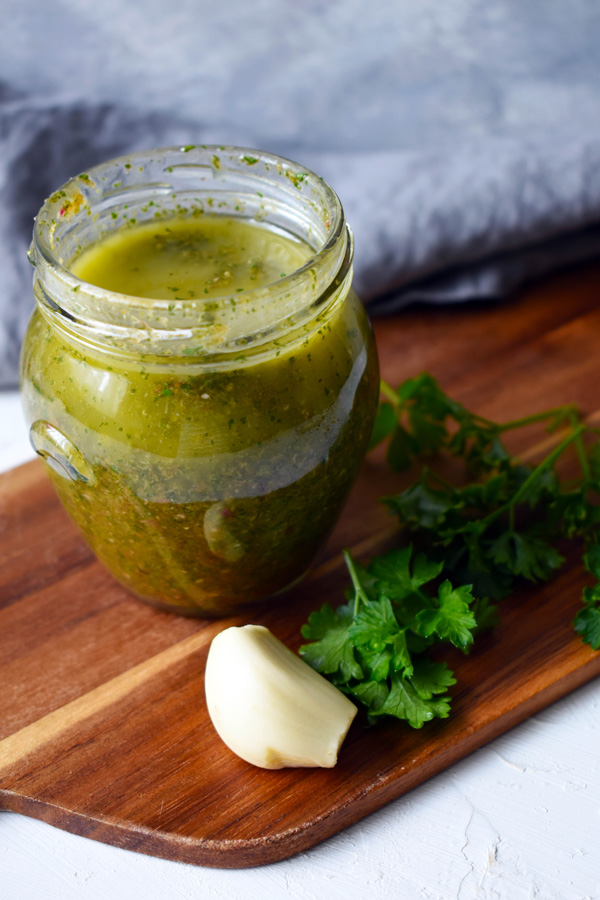
My Chimichurri Recipe
At first, I was a little worried because I couldn’t find any cilantro. “Can it still be called chimichurri without cilantro?” I asked myself. Then I checked some original Argentine and Uruguayan recipes and saw that they only used parsley as well. After that, I looked at more modern recipes and realized that every household has its own version. I figured the “chimichurri police” probably wouldn’t come after me for not following the rules exactly. Instead of worrying, I decided to let my imagination run free.
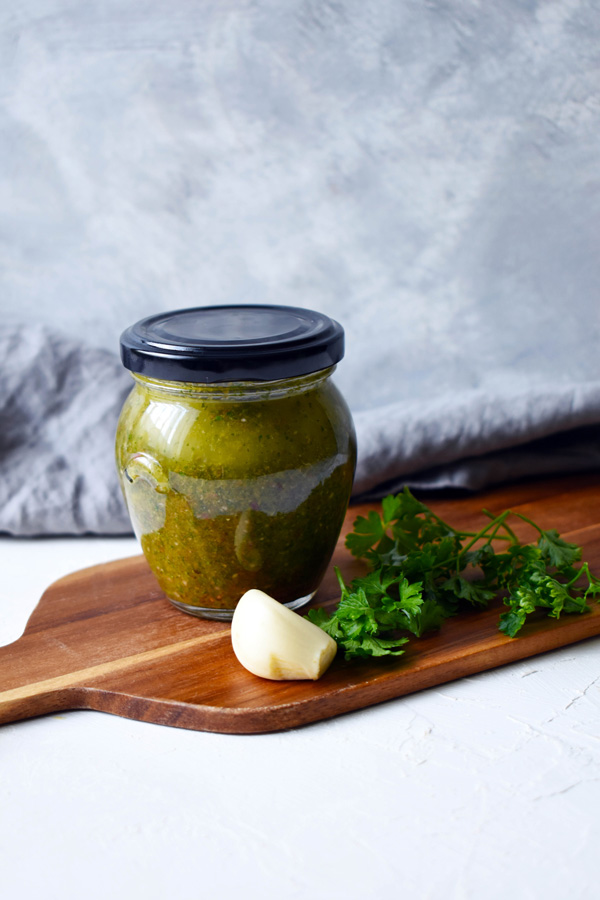
Herbs
I replaced the cilantro with fresh sage because it was growing beautifully in my herb garden. (Later I found out that sage can stimulate the appetite, so use it carefully!) Maybe parsley alone is more than enough, but if you have other fresh herbs at home, feel free to experiment with exciting combinations.
Chili
Most recipes also use chili peppers, but I’m not a huge fan of spicy food, so I left them out completely. But if you enjoy heat, go ahead and add some.
Garlic
Don’t skip the garlic, because it really enhances the flavor. I used 3 cloves of garlic, but if you want a stronger garlic taste, you can easily add 5 cloves.
Olive Oil
It’s best to use high-quality extra virgin olive oil for a chimichurri recipe. I added about 100 ml (½ cup) of olive oil. With this amount, the sauce became a little thinner, which was perfect for drizzling over salads. If I were using it as a spread for grilled meat or mushrooms, I would definitely make it thicker by using less oil.
Vinegar
Instead of red wine vinegar, I chose balsamic vinegar because it has a fruitier flavor. However, the original recipe calls for red wine vinegar. At this point, I suddenly remembered a lesson from culinary school about vinaigrette sauce, where we also mixed fresh herbs into a vinegar and olive oil dressing. So then… is this even chimichurri anymore?
What Is Vinaigrette?
According to the classic definition, vinaigrette is made by mixing oil with a mild acid, such as vinegar or lemon juice. The mixture can then be enhanced with salt, herbs, and/or spices. It is most commonly used as a salad dressing, but it can also serve as a marinade. Based on this, I think chimichurri is actually a type of vinaigrette.
For Me, It’s Simply the Great Wizard!
Honestly, it doesn’t really matter what we call it – the important thing is that it completely transforms salads, grilled dishes, and even pasta meals. I call it the “Great Wizard” because it can magically turn even a simple slice of toast into something entirely new.
How to Use Chimichurri Sauce
- as a salad dressing
- with cheeses – drizzle it generously over camembert, for example, but it also elevates any cheese platter
- for grilled dishes (fish, poultry, vegetables, or grilled beef, just like the Argentinians do)
- with this mozzarella salad
- for pasta dishes
- over roasted vegetables – it’s heavenly with beetroot!
- drizzled on top of pizza
- with this Grilled Vegetables with Chimichurri Sauce and Couscous Recipe
- spread on toasted bread
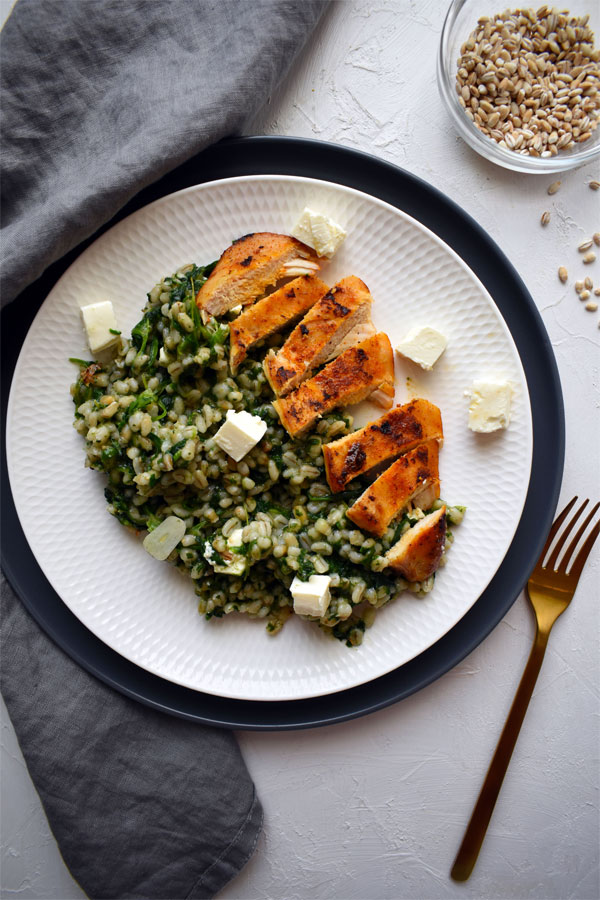
- for this recipe: Grilled Chicken Breast with Chimichurri Potato Salad
Chimichurri Potato Salad
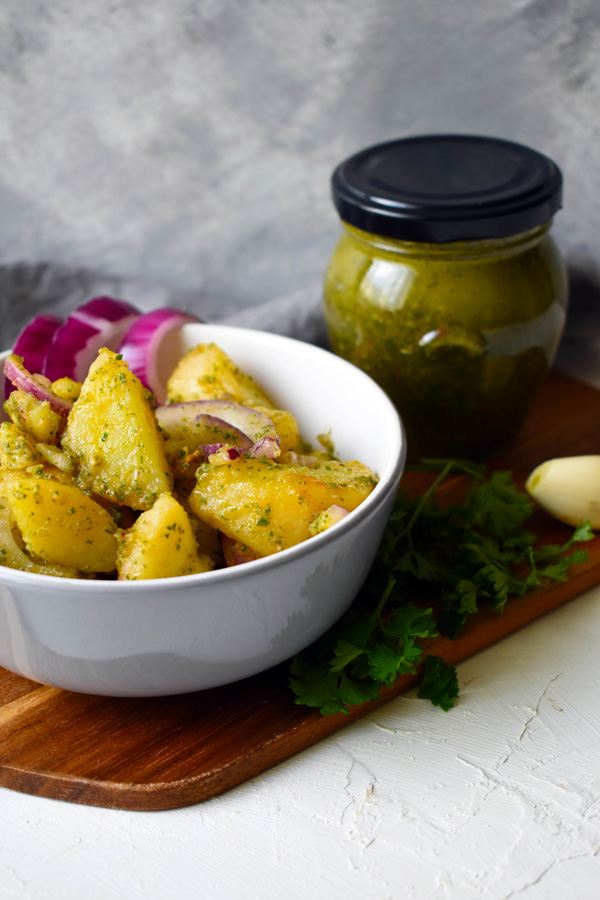
Mix some boiled potatoes with chimichurri sauce and a little red onion. You’ll get a unique potato salad that pairs perfectly with grilled dishes.
e-book (pdf)
Vegetarian Lunch Ideas
If you follow a meat-free or vegetarian diet, you probably know the struggle: it’s hard to find fresh, exciting recipes. You’re tired of the same old fried mushrooms, restaurant options feel boring, and you’re running out of ideas for what to cook at home.
This recipe book brings new inspiration to your kitchen with vegetarian meals for every occasion.
Chimichurri recipe
Ingredients
- 1 large bunch of fresh parsley
- 1 handful of fresh sage leaves (other herbs work well too)
- ½ red onion
- 3 cloves of garlic (or 5 if you prefer a stronger garlic flavor)
- Juice of 1 lime
- Freshly ground black pepper
- Freshly ground sea salt
- 2 tablespoons balsamic vinegar (or red wine vinegar)
- 100 ml (½ cup) extra virgin olive oil (this amount will make the sauce thinner; if you want it thicker, use only half as much)
Instructions
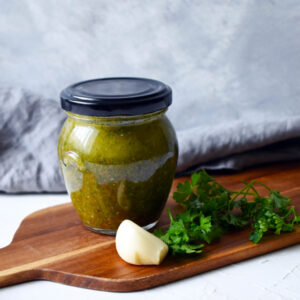
- Place all the ingredients into a food processor and blend until smooth and creamy.
- Tip: Store it in a glass jar in the refrigerator. It will keep for several weeks this way.
Calories and macros
Did you like it? There’s more where that came from. 🙂 Sign up for my newsletter!