

Healthy flours: which one should you choose and why?
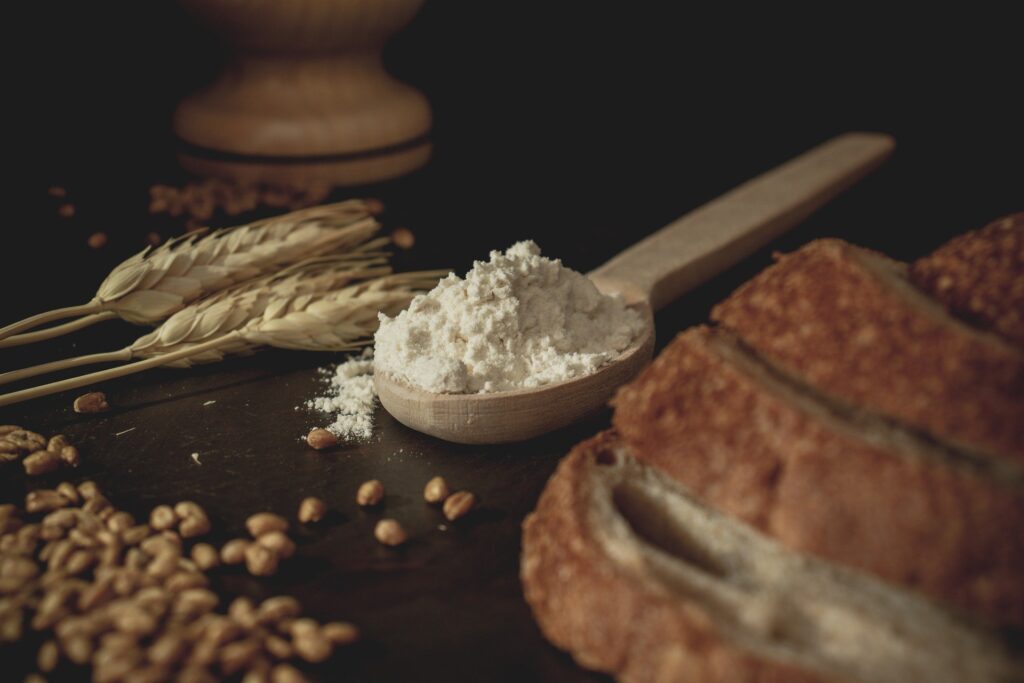
The healthiest flour depends on your goal – but in general, whole and minimally processed flours like oat, almond, and whole wheat are better choices than refined white flour because they contain more fiber, nutrients, and support stable blood sugar.
If you’re trying to eat healthier, manage your weight, or simply bake smarter, learning about different types of flour is one of the easiest (and most overlooked) upgrades you can make in your kitchen.
In this guide, I’ll show you:
- What flour really is?
- Why refined flour can be problematic?
- Which flours are the healthiest (and when to use them)?
- How to make better choices without giving up baking?
What is flour really?
Flour is made by grinding grains, and every grain has three key parts:
- Bran – the outer layer, rich in fiber
- Germ – the nutrient-dense core (vitamins, minerals, healthy fats)
- Endosperm – the starchy middle
Refined white flour contains only the endosperm, which means most of the fiber and nutrients are removed during processing.
This is where the main health difference begins.
Why is refined white flour considered unhealthy?
Refined flour isn’t “toxic” – but regular consumption can work against your health goals.
1. Low nutritional value
Most vitamins, minerals, and fiber are stripped away, leaving mainly fast-digesting starch.
2. Blood sugar spikes
Refined flour has a high glycemic index, which can lead to rapid blood sugar fluctuations and energy crashes.
3. Increased hunger and cravings
Low fiber = faster digestion → you feel hungry sooner.
4. May contribute to weight gain
Frequent spikes and crashes can lead to overeating and fat storage over time.
5. Linked to long-term health risks
Diets high in refined carbohydrates are associated with:
- Type 2 diabetes
- Heart disease
- Obesity
What is the healthiest flour?
There’s no single “perfect” flour – the best choice depends on your lifestyle and goals. But these are consistently strong options:
1. Oat flour – best everyday healthy option
- High in fiber (especially beta-glucan)
- Supports digestion and satiety
- Helps stabilize blood sugar
Best for: pancakes, muffins, thickening sauces
2. Almond flour – best for low-carb diets
- Low in carbohydrates
- Rich in healthy fats and vitamin E
- Naturally gluten-free
Best for: keto or blood sugar – friendly baking
3. Whole wheat flour – best simple upgrade
- Contains more fiber than white flour
- More filling and slower-digesting
Best for: everyday baking with minimal change
4. Buckwheat flour – best gluten-free grain option
- Naturally gluten-free
- Rich in antioxidants
- Supports heart health
Best for: pancakes, rustic breads
5. Coconut flour – highest fiber content
- Extremely high in fiber
- Low-carb
- Absorbs a lot of liquid
Best for: small amounts in baking blends
How do you switch to healthier flours without ruining your recipes?
One of the biggest mistakes I see is trying to replace everything at once.
Instead, do this:
- Start by replacing 25-50% of white flour
- Mix flours (for example: oat + whole wheat)
- Add chia or flax seeds for extra fiber
- Expect slight texture changes (this is normal)
From my experience: gradual changes work better and taste better.
How to make oat flour at home (2-minute method)
Oat flour is one of the easiest and most practical healthy swaps.
Steps:
- Take plain rolled oats
- Add to a blender
- Blend until fine
Store in an airtight container.
Why I personally love it:
- Budget-friendly
- Always fresh
- Works in both sweet and savory recipes
What is bread flour and is it healthy?
Bread flour is a high-protein wheat flour designed for yeast-based baking.
Why it behaves differently:
- Higher protein → more gluten formation
- Better structure and chewiness
Health perspective:
- Standard bread flour = refined → low fiber
- Whole wheat bread flour = better choice
Simple upgrade: if you bake bread regularly, switch to whole grain versions.
What is the difference between bread flour and all-purpose flour?
This is one of the most common baking questions.
Bread flour:
- Higher protein (12-14%)
- Chewier texture
- Ideal for bread and pizza
All-purpose flour:
- Moderate protein (10-12%)
- More versatile
- Suitable for cakes, muffins, cookies
Important:
From a health perspective, both are similar if refined. Whole-grain versions are the better option.
What is semolina flour?
Semolina is made from durum wheat and has a coarser texture.
Characteristics:
- Slightly yellow
- Higher protein than standard flour
- Common in pasta and couscous
Is it healthy?
- Better than refined white flour in some ways
- Still relatively low in fiber (unless whole grain)
- Moderate impact on blood sugar
Tip: Combine semolina dishes with vegetables and healthy fats to balance the meal.
Is almond flour healthy?
Short answer: yes, but portion matters.
Benefits:
- Low in carbs
- Rich in healthy fats
- Contains vitamin E and magnesium
Keep in mind:
- Calorie-dense
- Easy to overuse
Best use: nutrient-dense baking in moderate portions.
Final thoughts: what should you actually do?
Healthy eating isn’t about eliminating flour – it’s about choosing better versions.
If you want a simple starting point:
- Reduce refined white flour
- Replace it with oat or whole wheat flour
- Experiment with almond flour for low-carb recipes
From my own kitchen experience, these small changes are the ones that actually stick long term and that’s what creates real results.
If you’d like to go further, my recipes are built around these principles – simple, practical, and designed for real life. Start with one recipe, and you’ll quickly see how easy it is to upgrade your everyday meals without giving up the foods you love.
Try one of my recipes today and discover how simple it is to make healthier choices in your kitchen.
Recipes by Season