
The secret of healthy fats – That’s why you should eat them every day!
Butter, olive oil, coconut oil? Which one is better?
What are healthy fats? Is butter really unhealthy? Can you bake with olive oil? Is coconut oil really the healthiest oil for baking? These questions are sure to be on your mind if you want to lose weight or simply eat healthily. In my article, I explore healthy fats, reveal which ones are better and how to use them. At the end, I also give 10 tips on how to reduce your fat intake.
What is fat?
Before we get into the issues surrounding butter, olive oil, and coconut oil, we need to clarify one important question. Many people don’t know what fat actually is. Some people think that fat is just what our grandmothers used to spread on bread from that nice little retro butter dish. Others think that fat is only what is labeled as such, literally, as fat. I’ll let you in on a secret: both groups are partly right, but each is only one slice of the whole picture. If you eat a slice of chocolate cake, it contains fat. Even your seemingly innocent slice of protein may contain fats. In fact, it is almost impossible to avoid eating fats. This is because fat is one of the three basic nutrients.
The main components of food can be divided into three large groups:
- Proteins
- Carbohydrates
- Fats
These basic nutrients ensure the body’s structure and energy supply. The main role of proteins is cell building (body building, muscle building), while carbohydrates and fats provide energy. Since the latter two provide energy, we tend to focus on reducing them in our diet. This has led to the formation of “anti-carbohydrate groups,” who blame carbohydrates for weight gain, and “anti-fat groups,” who believe that fats must be eliminated in order to lose weight. Personally, I stand somewhere in between, but I am not particularly militant about either side. I believe that moderation is the key.
Does fat make you fat?
Whether a food is considered dietetic or not is determined by the ratio of the three basic nutrients. This is called calories (kcal). It is actually kilocalories, but in everyday language we just call it calories.
Calories show the energy value of the three basic nutrients in a given food. 1 gram of protein is 4 calories, 1 gram of carbohydrates is also 4 calories, but 1 gram of fat is 9 calories.
Are fats bad or good?
It is a fact that fats are the most fattening of all basic nutrients. However, deciding whether fat is good or bad is a slightly more complex issue.
The fats we consume are easily stored because our bodies are less able to utilize them, but our bodies need essential fatty acids. This is because vitamins A, D, E, and K are fat-soluble vitamins. Without fats, they cannot be utilized by the body. Without fats, hormones and bile acids, which are essential for digestion, would not be produced. Fats are essential building blocks of cell membranes and nerves.
Saturated or unsaturated?
Chemists distinguish between saturated and unsaturated fatty acids. The ones you need to limit are saturated fatty acids. These are solid at room temperature and spreadable. They are mainly found in foods of animal origin, such as cream, butter, meat, and cheese, but they are also found in coconut and palm oil. Consume saturated fats in moderation, as consuming large amounts of them weakens the circulatory system and narrows the arteries. In addition, they can cause insulin resistance. Saturated fats are also responsible for increasing cholesterol levels. However, in addition to hereditary factors and stress, there are many other things that can contribute to this, not just fats.
With saturated fatty acids, the key is quantity. You don’t have to completely exclude them, because in moderation, they can all be part of your diet. Beef, for example, contains many vitamins that your body needs, and you don’t have to give up egg yolks completely, because they contain vitamin A and vitamin B6, which you can also get from the pharmacy, but I think nothing can compete with the natural source. Natural is always better than a manufactured copy.
In fact, it is impossible to clearly prove with facts that any fat is healthy or unhealthy. It is not a black-and-white issue.
Unsaturated fatty acids are usually liquid and are mainly found in oils. Valuable sources include olives, nuts, and fish. Unsaturated fatty acids are essential for a healthy lifestyle. A deficiency can lead to growth problems, reduced concentration and learning ability, as well as nervous system disorders, varicose veins, and skin disorders (e.g., eczema, dry, flaky skin).
Caution: contains trans fatty acids!
Part of a healthy diet is watching the amount of fully or partially hydrogenated vegetable fats you consume. According to the World Health Organization (WHO), even 2 grams per day can be harmful to your health (causing heart disease, diabetes, and obesity).
Refined coconut oil, butter, and margarine, for example, contain unhealthy trans fatty acids. However, you can find products that are not made with hydrogenated vegetable oil, so always check the packaging! Avoid products that say “hydrogenated” or “partially hydrogenated” on the label.
Pre-packaged cakes, chocolates, and cookies most often contain these.
Healthy sources of saturated fats
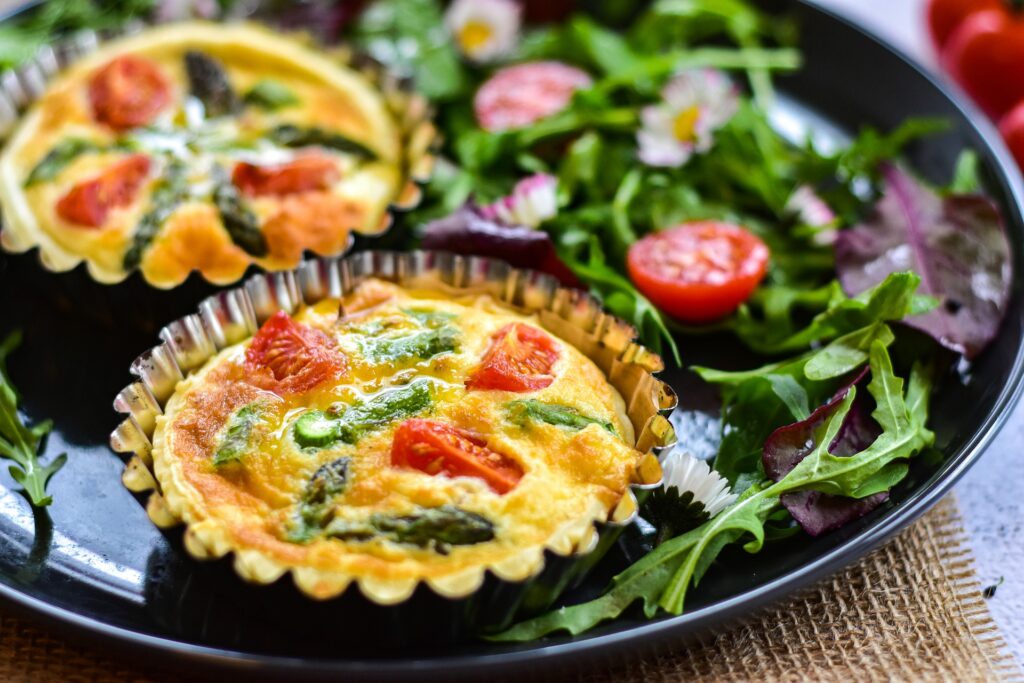
Consume these in moderation!
- animal fats (pork fat, duck fat, goose fat, etc.)
- coconut oil (coconut fat)
- egg yolk
- beef
- high-fat dairy products
Healthy sources of unsaturated fats
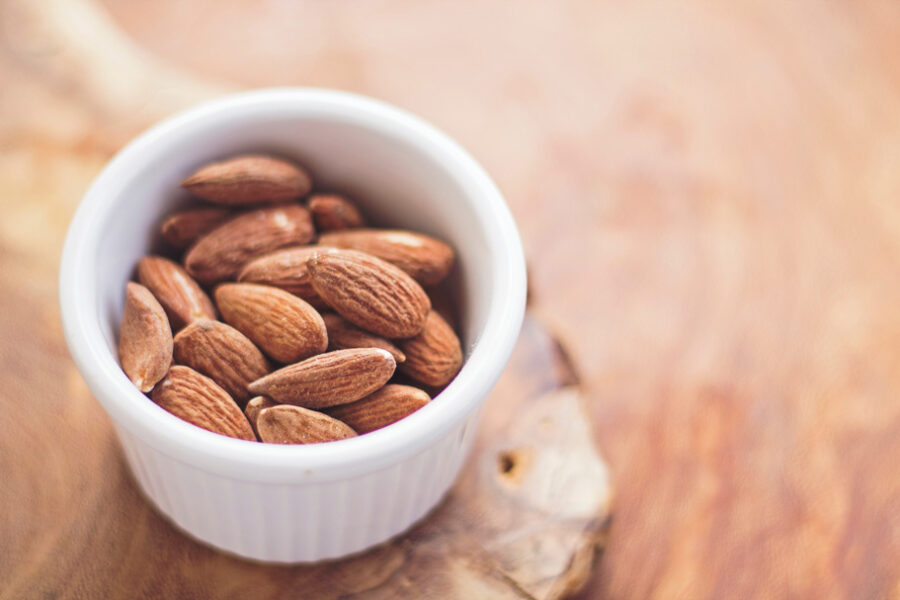
These are worth consuming (but in moderation if you want to lose weight):
Oils, for example:
- flaxseed oil
- olive oil
- fish oil
- pumpkin seed oil
- sesame oil
Oil sources, for example:
- olives
- avocados
- almonds, peanuts, and other nuts
- salmon and other fatty fish
- seeds: flaxseed, pumpkin seeds, sunflower seeds, chia seeds
The bottom line: no matter which oil you use, just make sure it’s unrefined.
How to keep fats in moderation?
In terms of calories, you also need to be careful with unsaturated fats. One tablespoon of flaxseed oil contains approximately 106 calories. You should not consume more than one tablespoon per day. A small handful of nuts is also recommended daily. Salmon and other fatty fish are fine twice a week. Just because they are healthy, you don’t have to go overboard!
It is also important to note that some people need more fat than others. In general, we can say that
- Men need more fat than women,
- young people need more fat than older people,
- and we need more fat in cold winter weather than on warm summer days.
Why consume healthy fats?
Omega-3 and Omega-6 enzymes, which are found in unsaturated fatty acids, are particularly important as they help maintain proper metabolism and blood sugar levels, as well as making our hair, nails, and skin beautiful and healthy. What is important for women is that consuming these fats can reduce menstrual pain. They are found in: flaxseed oil, walnuts, fish, peanuts, peanut butter, egg yolks, etc.
Snack Tip
For a snack, munch on raw carrots drizzled with a few drops of flaxseed oil. Carrots are rich in vitamin A, which is good for your hair and skin and helps burn fat. The oil is needed to help the vitamin A reach your cells more effectively.
When should you consume fats?
It is best to consume fats at breakfast and lunch, as digesting fats puts increased strain on our bodies. Don’t burden yourself with digestion in the evening!
Of course, this is difficult to adhere to completely, as most foods contain fat. Make sure that easily digestible proteins predominate in the evening. You can eat more fat at breakfast and lunch, for example, you can eat more whole eggs in the morning, but for dinner, eat only the protein part or a maximum of one yolk.

Butter, olive oil, coconut oil? Which is better?
Butter
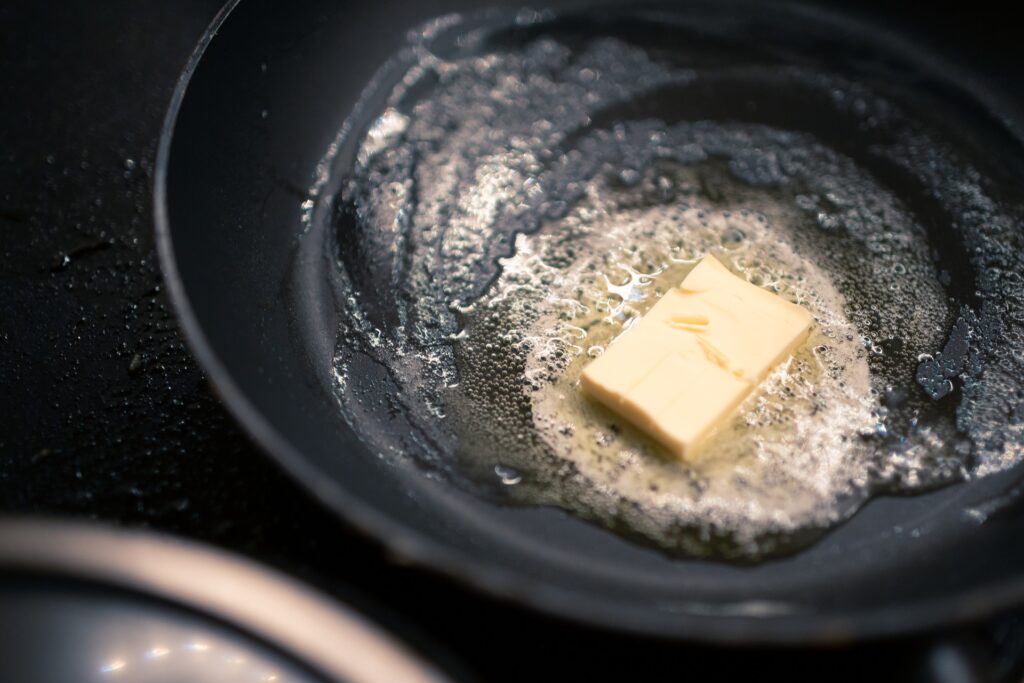
Butter is considered a dietary no-no because it contains unhealthy trans fatty acids. So we definitely need to reduce our butter consumption, but we can’t ignore it when preparing food, as some dishes (pastries, steamed vegetables) only achieve their maximum flavor and the familiar taste we love with the help of butter. For me, delicious flavors are just as important as nutritional content and the health effects of food. So I can’t do without butter in my kitchen, as I haven’t yet found a suitable alternative in terms of taste and texture. The taste of vegetables sautéed in butter cannot be compared to the taste of vegetables sautéed in coconut oil. It is no coincidence that world-famous French cuisine uses a high percentage of butter in food preparation. They bake, sauté, and season with butter. The dishes are flavorful and harmonious.
French paradox
The French paradox refers to the phenomenon that, despite their high butter consumption, the French have a lower incidence of cardiovascular disease than other countries where people consume less fat on average. This effect is attributed to their consumption of red wine, as the substances found in red wine reduce the likelihood of cardiovascular disease, and the French love red wine perhaps even more than they love butter.
From all this, I conclude that butter should remain in our kitchens if we want to prepare truly flavorful dishes, but we should not overdo its consumption. To do this, we need to learn to bake with it sparingly.
Olive oil
Olive oil is one of the best vegetable oils, extracted from pressed olives. It is heart-friendly and rich in polyphenols and antioxidants. These are all beneficial substances in the prevention of cancer and cardiovascular diseases.
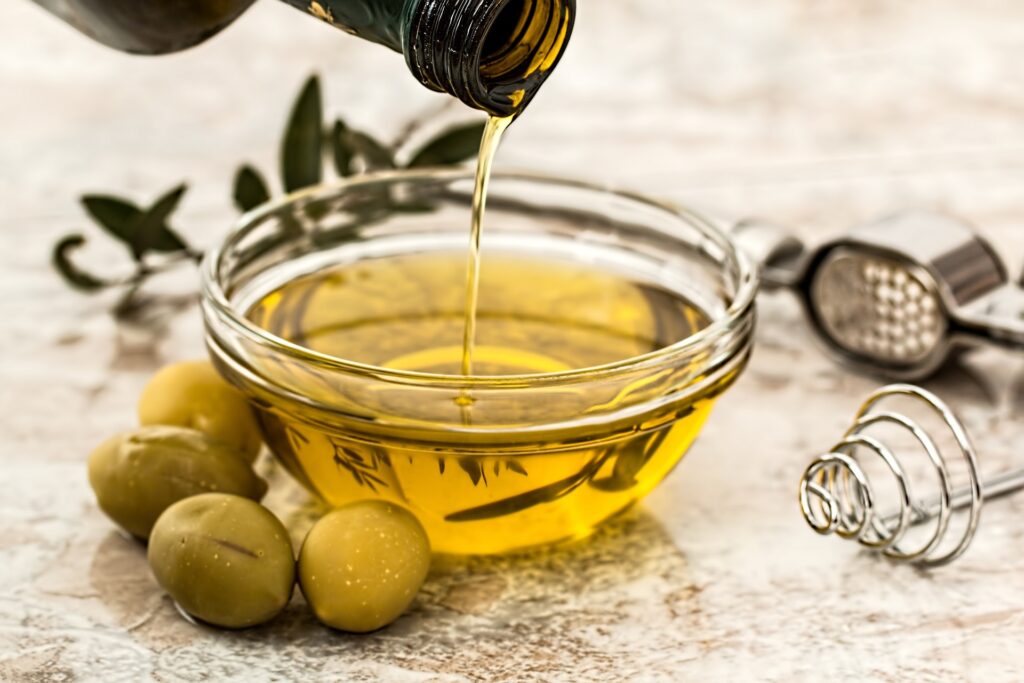
Extra virgin olive oil
The best quality olive oil is the first oil extracted from the olives by pressing. This is called extra virgin olive oil. It is the most expensive because it is much more valuable. No heat or refining is used in its production. This is called cold pressing, and it is what makes it truly healthy.
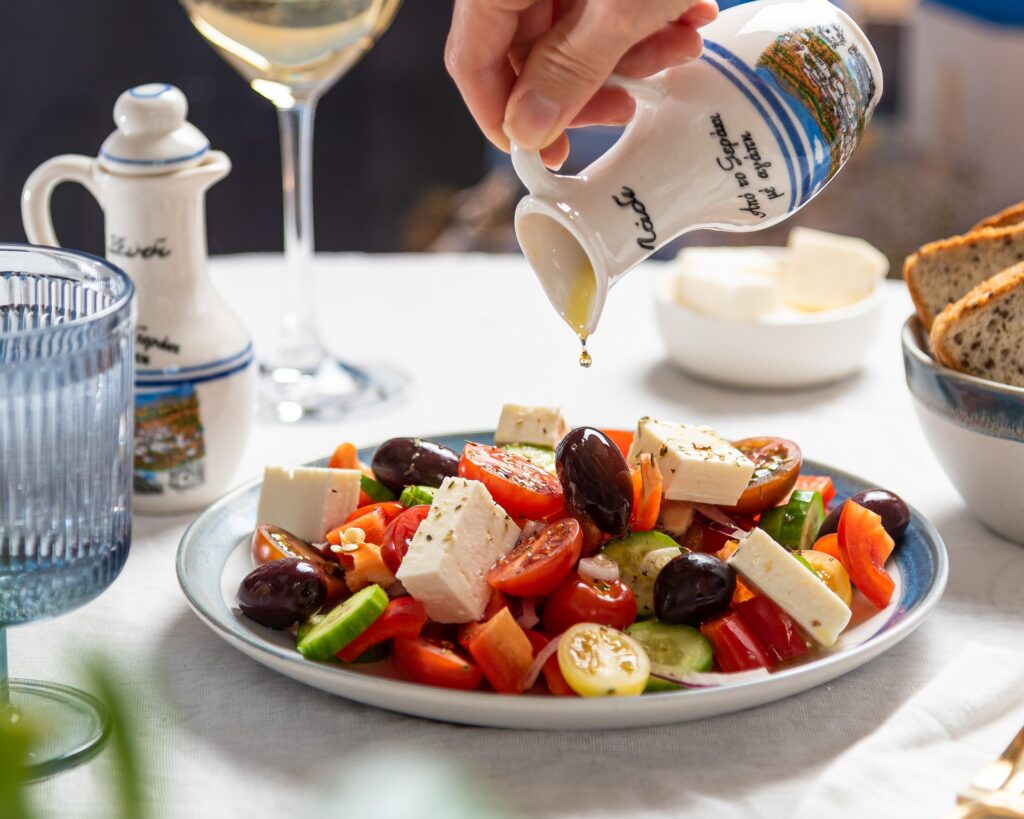
It is important not to heat extra virgin olive oil for too long in the kitchen, as this causes it to lose its valuable nutrients. However, it can be used for short periods of time for quick frying at temperatures around 200 degrees Celsius. But it’s not really worth it, because extra virgin olive oil has such a distinctive, fruity flavor that it’s better for salads or drizzling over pasta dishes – if it fits into your diet! The same is true for various seed oils. Flaxseed oil is also an extremely healthy fat, but only if it is not heated, but used cold as a seasoning.
Virgin olive oil
This has a slightly milder flavor than extra virgin olive oil. It is pressed less carefully during production. In the kitchen, it also works well for short periods of time and at temperatures around 200 degrees Celsius. It is best used for frying bread cubes, for example.
Olive oil
Olive oil is of lower quality than extra virgin olive oil because it is refined during production and is not extracted from the first pressing, but from the second or third. It can also be mixed with virgin olive oil. Since it has already been heated during production, we can safely use it in the kitchen. Its flavor is not as strong, so it can even be excellent for baking pancakes.
Tip
Store extra virgin olive oil in a dark glass bottle or metal container, as it is sensitive to light and heat. Keep it in a dry, cool place and use it within 1-2 months after opening.
Coconut oil
For cooking and baking, use olive oils specifically designed for this purpose, or try coconut oil. It is also excellent for frying pancakes or roasting meat. You can also use it to flavor cakes instead of butter. However, be careful to consume it in moderation and DO NOT choose the type that says “refined” on the label!
It is important to choose coconut oil that is cold-pressed or virgin coconut oil. You can recognize this by the VCO label. Refined coconut oil contains unhealthy trans fatty acids.
What about sunflower oil?
Sunflower oil is usually refined cooking oil. The problem with this is that it no longer contains any valuable nutrients.
10 tips on how to reduce your fat intake
To sum up, here are 10 tips on how you can reduce your fat intake in everyday life.
1. Banish the deep fryer!
It is essential for healthy eating to banish the deep fryer from your kitchen, because frying in oil has two problems. One is that the oil is likely to burn, introducing harmful (carcinogenic) substances into your body. The other is that the food will soak up the oil, making it anything but diet-friendly.
For those who still insist on Sunday fried meat cooked in oil, I recommend this oven-baked version instead (if you want to lose weight or eat healthily).
Excellent hot air fryers are available today. I recommend these instead of frying in oil.
2. Replace animal fats with vegetable fats!
Hungarian cuisine likes to fry food in lard or duck fat. This is also the basis of a good Hungarian roux. However, if we want to reduce our consumption of animal fats, we can easily make roux with olive oil. Meat can also be fried in olive oil or coconut oil. Choose the right oil for this! (see above).
3. Get yourself a great frying pan!
To minimize the use of fat, choose a non-stick ceramic or Teflon pan, as food will not burn in these even if you fry with just a few drops of fat. The fat can be olive oil, coconut oil, or butter suitable for frying.
In practice
If you are baking pancakes, for example, melt the measured amount of butter (the amount allowed in your diet) (this makes it look like more and is easier to use), then use a brush (made of rubber or feathers) to spread it over the pan. This way, you will use significantly less butter than if you had put a teaspoon of butter in the pan. What’s more, you can spread it more evenly, so the food won’t burn. You can use the same method with olive oil and coconut oil.
4. Remove any fatty parts from the meat!
Preparing raw meat also involves cutting off any hanging parts, remaining fat, protruding connective tissue, and tendons so that the meat is nicely shaped, tenderizes more quickly, and contains less fat.
For example, always remove the skin from chicken, as it contains a lot of extra calories and fat.
Remove the fatty parts from cold cuts as well. Choose cold cuts that are low in fat but high in protein. Forget about these, or eat them in moderation, because they are full of fat: cracklings, pork cheese, sausages, frankfurters, and winter salami.
5. Eat more vegetables and fruit!
Eat plenty of vegetables, legumes, whole grains, and fruit. These foods contain little or no fat.
6. Eat more fish!
Cut down on red meat and go for poultry and especially seafood!
7.Eat low-fat dairy products!
From a healthy lifestyle perspective, it is still debatable whether low-fat or full-fat dairy products are better. However, from a weight loss perspective, I definitely vote for low-fat products and recommend low-fat milk, sour cream, and cream. The same applies to cheese. Choose light cheeses!

8. Avoid ready-made products!
Vegetables offered by nature are low in fat: 100 g of potatoes cooked in their skins contain 0.3 grams of fat and 66 calories. The same amount of chips contains 40 g of fat and 549 calories.
The situation is similar with pre-packaged muesli and porridge. It’s better to make your own!
Find a homemade granola recipe here.
9. Be careful with cheese!
“Oh, a little cheese can’t be that high in calories!” you think, and pile it onto your sandwich. In fact, most cheeses are high in fat, and you have to use a magnifying glass to find the ones that are low in fat. Pizzas and hot sandwiches are dangerous from a dietary point of view because they are thickly covered with cheese. Even a small amount of most cheeses contains a huge number of calories.
Choose light cheeses! For example: light feta cheese, light mozzarella cheese.
Avoid fatty cheddar, camembert, and other particularly fatty varieties!
Use calorie counting websites before you eat! Check how much fat is in a slice of cheese!
Have you tried my diet pizza recipe yet?
10. Avoid fat traps!
Cakes, pies, ice cream, and chocolate are real fat bombs that are best avoided. Or you can make them in a fitness-friendly way. My Sugar-free Desserts will help you with this.
Summary
Healthy fats can play a key role in a healthy lifestyle. You cannot and should not completely avoid consuming fats, because your body needs them. The key here is to consume them in moderation. Choose unsaturated fats and avoid trans fats altogether. When it comes to olive oil, it matters which one you choose from the shelf for cooking. Extra virgin olive oil should not be heated too much. When buying coconut oil, make sure it is not refined. There are many other small things you can do to reduce your fat intake. Fat is high in calories, it is easy to consume too much of it, and this leads to weight gain. Not sure how much is too much? Calorie counting can help, which you can read about in detail in this article: Calorie Calculator for Weight Loss
Photos: Pixabay
References: Marion Grillparzer: Fat Burner: Eat Yourself Slim – The Secret to Lasting Slimness