
Is Granola Healthy?
How to Make It at Home?
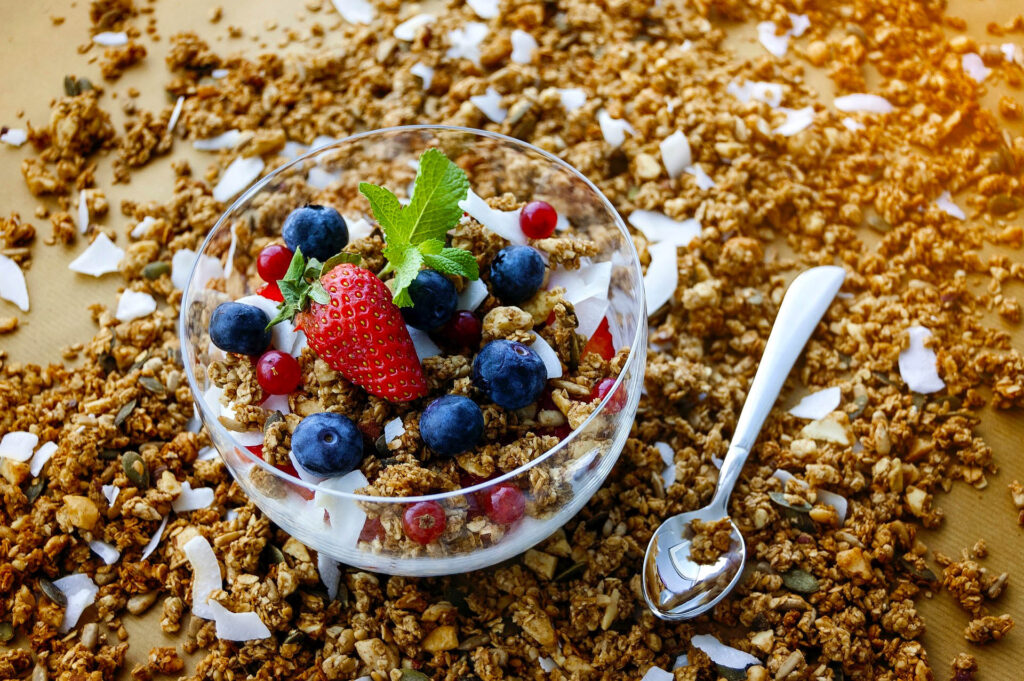
People always tell you to start your day with a healthy breakfast, but you have no idea what to eat? You love muesli and sweet breakfast cereals, but after reading the labels and seeing how much sugar they contain, you no longer know what kind of healthy breakfast to choose? Would you like to start your day with something that supports your digestion, gives you energy, and tastes absolutely delicious? And wouldn’t it be great if it worked not only as breakfast, but also as an afternoon snack? Choose granola!
What Is Granola?
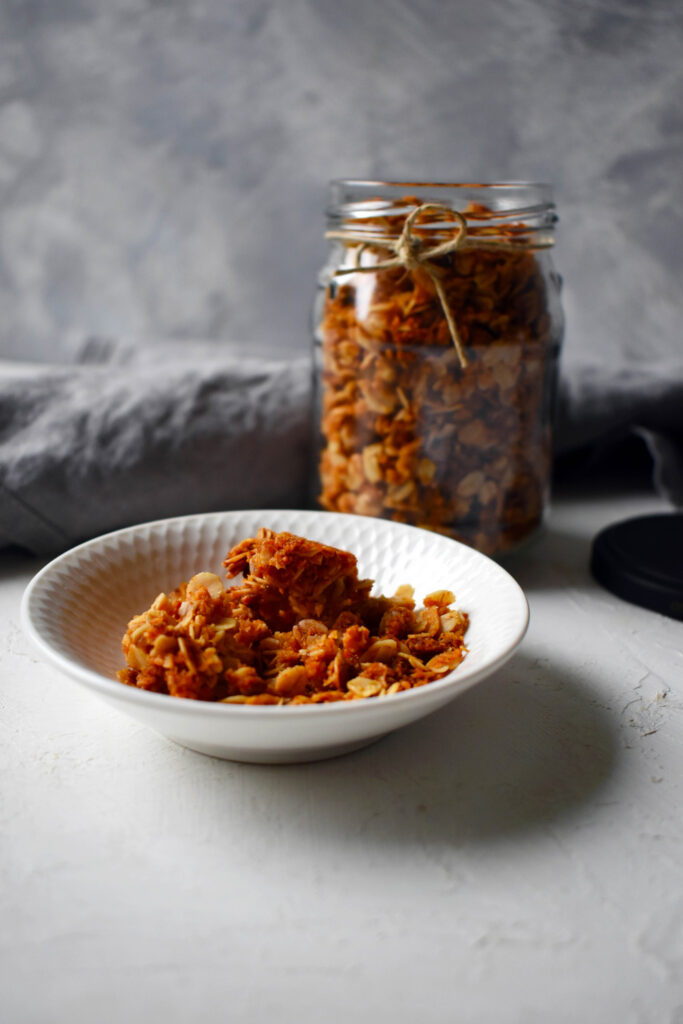
According to the dictionary, granola is: “A breakfast muesli made from natural ingredients, originally a U.S. brand name.” In my opinion, this definition does not really say much about granola. I would describe it more as a baked version of muesli, enriched with extra ingredients that turn it into a super healthy breakfast or snack.
What Is the Difference Between Muesli and Granola?
The raw honey or maple syrup used in granola caramelizes during baking, and together with the crunchy texture created by the baking process, it elevates traditional muesli to a completely new level.

My Story with Granola
Let me tell you about granola’s role in my life. When I first saw this muesli-like sweet breakfast in a food magazine, I simply waved it off and quickly turned the page, thinking:
“Here comes another fancy trend.”
“Why change something that’s already good? Why complicate muesli? Why would I even put it in the oven?”
Those were my thoughts – or rather accusations – when I first encountered granola. I didn’t try it. I didn’t taste it. I judged it.
Is Granola Just a Fancy Trend?
After that, I kept seeing it on Pinterest, and then it started appearing in stores as well, packaged in very stylish boxes. But it was expensive, and that only confirmed my theory that granola was just another overcomplicated breakfast trend for people who like making simple things difficult. At the time, I was still eating oatmeal with sweetener or sandwiches with salad for breakfast.
The Turning Point
Then came another turning point in my nutrition journey, when I decided not only to quit refined sugar, but also all kinds of artificial sweeteners. I started eating my oatmeal without sweeteners, and honestly, it did not taste good at all. So I began looking for other breakfast options, and that was when I came across Hester’s Life granola, which contained no sugar or sweeteners of any kind. I tried it, and I absolutely loved the taste. It was naturally sweet from the dates – just sweet enough.
First, I tasted a coconut granola, and after it disappeared from the box in about three days, I bought a cinnamon one as well. It was even better. I noticed that I kept reaching for it again and again. I enjoyed snacking on it by itself. It was perfect as a healthy snack. I added it to yogurt, ate it with milk, and often just on its own. But it was expensive, and I didn’t want to buy a third box.
My First Homemade Granola
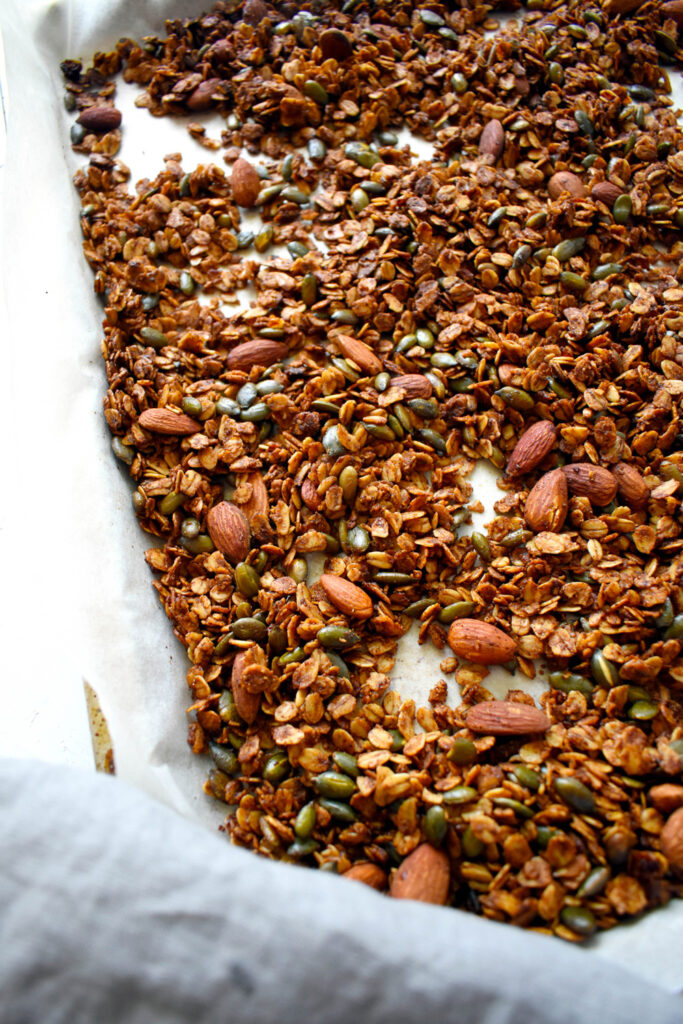
I read the ingredients list and decided to make it myself at home. For my first homemade granola, I used gingerbread spice mix, almonds, and pumpkin seeds. I wanted to create an autumn-winter version. I used honey as a sweetener. This first recipe turned out really well – maybe even tastier than the store-bought version. I happily snacked on it by itself and even created an autumn-inspired dessert cup recipe with it.

I only started looking into granola after I had been making it for a while. What I discovered was that it’s an incredibly versatile breakfast option that can easily be adapted to your own taste.
Why I Love Homemade Granola
Homemade granola combines rolled oats, nuts, seeds, and dried fruit into a crunchy, flavorful mix that works just as well for breakfast as it does for a snack.
One of the best things about making your own granola is that you can customize it with your favorite ingredients. Oats create the perfect base, while nuts and seeds add texture and richness. Dried fruit brings a touch of natural sweetness, and you can experiment with spices such as cinnamon or vanilla for even more flavor.
How to Eat Granola
- Pour milk over it (plant-based milk works too)
- Mix it into yogurt
- Sprinkle it on the bottom and top of a dessert cup (like in this recipe)
- Use it as a topping for oatmeal
- Snack on it by itself
- Eat it with fresh fruits – or during autumn and winter, alongside baked fruits

How Many Calories Does Granola Contain?
Nutritional values of my Fall Granola recipe:
1 serving (60 g)
- Energy: 298 calories
- Protein: 8 grams
- Carbohydrates: 24 grams
- Fat: 17 grams
When Should You Eat Granola?
Breakfast Idea
Enjoy it with milk (plant-based milk works beautifully too), or stir it into yogurt. I often sprinkle a little over my chocolate oatmeal for extra crunch and flavor.
Snack Idea
Mix it into yogurt and serve with fresh fruit for a simple and satisfying snack.
Crunchy Dessert Topping
Sprinkle it over the bottom and top of a dessert glass (like in this recipe), or simply enjoy it on its own whenever you’re craving something crunchy.
How to Make Homemade Granola
Base
The base of granola is oats, which can be either quick oats or rolled oats. I personally recommend rolled oats.
Sweeteners
You can sweeten granola with raw honey, dates, or apple concentrate. But if you can find high-quality maple syrup or agave syrup made only from natural ingredients, those are great options too.
Oils
Use coconut oil or olive oil to make your granola even crunchier.
Nuts and Seeds
You can add any nuts or seeds you like, for example:
walnuts, peanuts, cashews, pecans, hazelnuts, almonds, pumpkin seeds, flax seeds, sunflower seeds, etc.
Superfoods
Feel free to enrich your granola with superfoods such as:
goji berries, chia seeds, or dates.
Other Flavorings
Dark chocolate, coconut flakes, shredded coconut, fruits (dried or freeze-dried) – it is important to choose sugar-free versions of these as well!
I personally do not add raisins because they are very high in fruit sugar, which significantly increases the calorie content.
Spices
A pinch of salt (to enhance the flavors), cinnamon, cardamom, gingerbread spice mix, nutmeg, ginger, etc.
What to Look for When Choosing Store-Bought Granola
- It should not be sweetened with sugar, cane sugar, or any refined sugar. Sugar-free versions are the best.
- It should not contain flour.
- It should not contain flavor enhancers, artificial flavors, or additives – only natural ingredients.
In general, you are usually better off choosing artisan or handcrafted products, because they are more likely to contain only natural ingredients.
The Advantages of Homemade Granola
- It is cheaper than store-bought granola.
- You can customize it to your own taste.
- You can make larger batches at once.
- Store-bought granola can never compete with the amazing aroma coming from your oven.
- You do not need to spend time reading product labels to check for sugar or unnecessary additives, because you know exactly what you put into it.
Is There Such a Thing as Savory Granola?
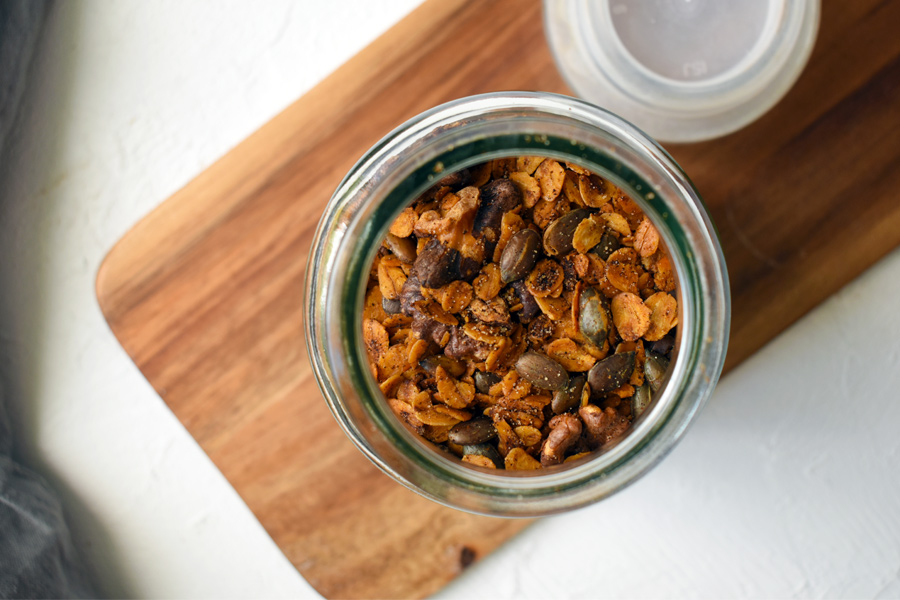
Yes! Savory granola has a similar base to the sweet version: oats, seeds, and nuts, but the seasoning and ingredients focus on savory flavors instead. Check it out here: >> Savory granola: Hungarian-inspired recipe with paprika
Summary
Granola is super healthy and delicious, but it should still be eaten in moderation, because the calorie content from nuts, seeds, and added extras can sometimes be higher than what fits into your diet plan.
It is true that the dietary fiber in granola can support weight loss, but if you become completely addicted to it and eat several servings every day, it may actually cause weight gain instead of weight loss.
I recommend eating portions that fit your daily calorie needs.
You can buy granola from the store, but at least once, definitely try making your own homemade version. You are going to love your very own baked muesli blend!