
What Is Hungarian Soup?
What types are there, and how can they be prepared in a healthy way?

Our traditional soup recipes are gradually fading into the background beside the abundant – yet unhealthy – selection of fast foods. Soup nourishes, heals, and warms us from within. To me, this means that a well-made soup can restore both body and soul at the same time. A good soup contains no artificial flavorings. It is not a quickly thrown-together instant soup from a packet, but a hearty lunch or dinner rich in vitamins and minerals. In this article, I will explore every detail of soup and present our Hungarian soups with the open intention of restoring their honor. Let’s eat more Hungarian soup! And there is no need to fear the extra kilos either. I will show you a few tricks that can make even Hungarian soups diet-friendly.
What Is Soup?
While researching Hungarian soups, I first turned to what I had learned in culinary school. According to my culinary textbook,[1] “Soups are dishes containing a large amount of liquid, usually served as the opening course of a meal.”
In my opinion, soup is much more than that. Soup nourishes, heals, and warms us from within, although it can also lead to weight gain if the proportions are wrong. As a nutrition consultant, I will show you how to enjoy our Hungarian soups without increasing body weight. Because soup does not heal if it leaves you feeling like you are about to burst. The proportions must be right so that the body, soul, and mind are all satisfied.
My Grandmother’s Legacy
After the culinary textbook, I decided to take out the legendary work left to me by my grandmother: the cookbook. This masterpiece is none other than Ilona Horváth’s cookbook, a 1976 edition that I inherited from my grandma. As a child, we baked and cooked together often, and this book – already patched up with all kinds of strange ribbons so it would not fall apart – was always present in the kitchen.
Generations grew up with this cookbook, and my grandmother considered it the ultimate standard. Perhaps she inherited it from her own mother, which might explain why it was already so worn and battered. I do not know, because she never said. What is certain, however, is that even in her time (my grandmother was born in 1928), this book was considered essential in every Hungarian household. And it contained not only recipes, but already back then (in 1976!) it was written with the understanding that the modern housewife had little time to cook and therefore needed clever tips to speed up the process.
It is incredible that nearly 50 years ago, the lack of time was already an issue. So what should we say today? How can we prepare delicious and nourishing soups every day when we have less and less time?
The Soup of the Modern Housewife
In the past, more women devoted their entire lives to cooking and managing the household. Today’s modern woman usually completes these tasks during her “second shift,” after finishing her daily job – and cooking is part of that. She does not have time to spend all day bustling around the kitchen. She is not going to cook chicken soup for three hours.
The good news is that she does not have to. We have many soups that can be prepared in just half an hour. There is no need to reach for instant packet soups. Using my experience as a chef and my knowledge as a nutrition consultant, I will show you how to prepare healthy and delicious soups quickly, so that every bowl becomes a declaration of love.
But first, let us get to know soup itself better – specifically, Hungarian soup.
Soups Are the Oldest Dishes of Hungarian Cuisine
Soups are among the oldest dishes in Hungarian cuisine. For farmers performing hard physical labor, as well as fishermen and hunters, heavily seasoned, hearty, fatty soups were the primary source of nourishment. Our linguistic heritage also proves this, including words that date back to the era of the Hungarian conquest.
Hungarians Tenderize Meat Under the Saddle
“The chroniclers even recorded that the Hungarians, who raided throughout Europe, were already familiar with something similar to instant soup. Before setting out for war, they cooked large pots of fatty, spicy soup filled with chunks of meat. They boiled it until all the liquid evaporated, then spread it out in the sun to dry. Once it had hardened completely, they tied it into bags and hung it from the saddle. (This is probably how the idea spread abroad that Hungarians tenderized meat under the saddle.) All they had to do was throw a few handfuls of this dried meat into hot water, and a delicious soup full of the flavors of home was ready.” [2]
Characteristics of Hungarian Soup
Whenever I travel abroad as a Hungarian – especially in America, Italy, or Germany – I am often surprised to find hardly any soups on restaurant menus. And if there are one or two options, they are usually eaten for dinner rather than lunch (as in France or England).
A friend of mine once told me that while on a business trip in Italy, he had dinner with some Italians. He waited a long time for the soup, and when he finally realized it was not coming, he asked whether there would be any soup at all. The Italians looked at him in shock and replied:
“Are you sick? We only eat soup when we are sick.”
Hungarian soups
A traditional Hungarian meal consists of three courses and begins with soup. Soup, main course, and dessert – this is the classic structure of a Hungarian meal. We mainly eat soup for lunch.
We Hungarians place much greater emphasis on soup than many of the nations around us. At the same time, in Asia people consume even more soup than we do. Famous examples include ramen (Japanese noodle soup), pho (Vietnamese beef soup), and tom kha gai (Thai coconut soup). These are well-known and popular soups in Hungary too, and sometimes I feel they are beginning to overshadow our traditional Hungarian soups.
Many people want to try something new, so they experiment with the cuisines of other nations. I believe balance is important here as well. It is worth discovering new flavors and ingredients, but we should not forget our Hungarian soups. After all, the ingredients for these are much easier to obtain. We do not need expensive fish sauces, bamboo shoots, or rice noodles. Common sense tells us that we should cook with what we already have.
And we have excellent Hungarian onions, paprika (also called spice paprika), savoy cabbage, potatoes, marjoram, and flavorful meats. Most Hungarian soups also contain meat and are built on a stew base, such as goulash soup or Palóc soup. We should not forget our delicious Hungarian sour cream either, which works wonderfully as a thickening ingredient. The best Hungarian soups are made from excellent Hungarian ingredients.
Classic Hungarian Soups
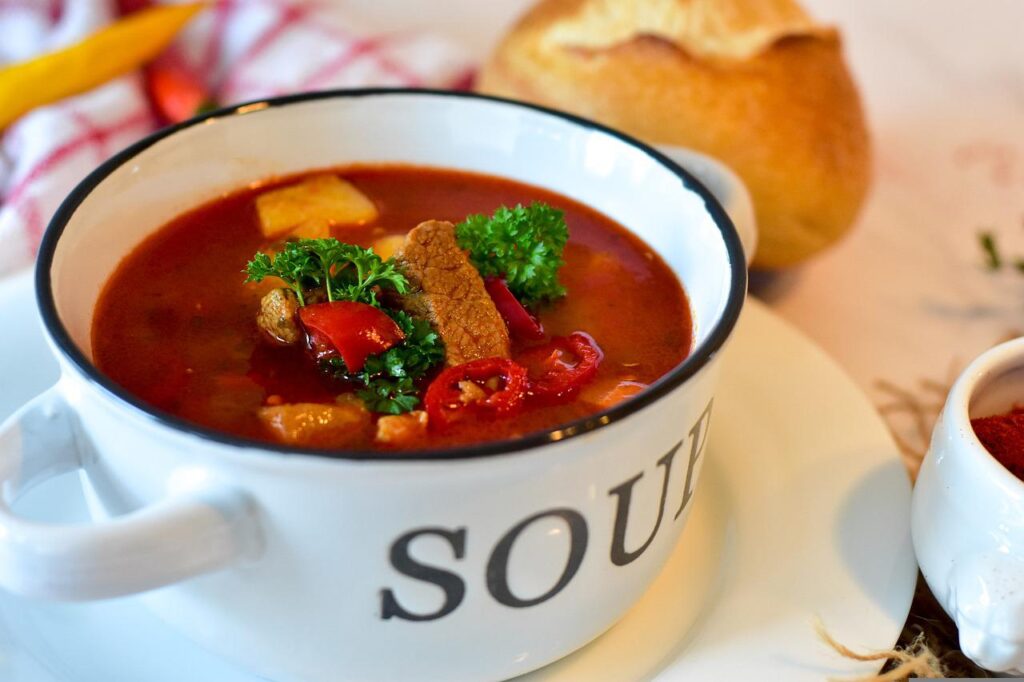
While researching famous Hungarian soups, I began to worry because I could hardly find any. Even when asking foreign friends, usually only two soups are mentioned: goulash soup and fisherman’s soup. Could these really be our only famous soups?
Most international books and websites recommend the following soups to foreigners:
- Goulash soup
- Fisherman’s soup
- Tarragon chicken ragout soup
- Jókai bean soup
- Meat soup / broth
- Palóc soup
- Hangover soup (Korhelyleves)
- Pea soup
- Potato soup
- Lentil soup
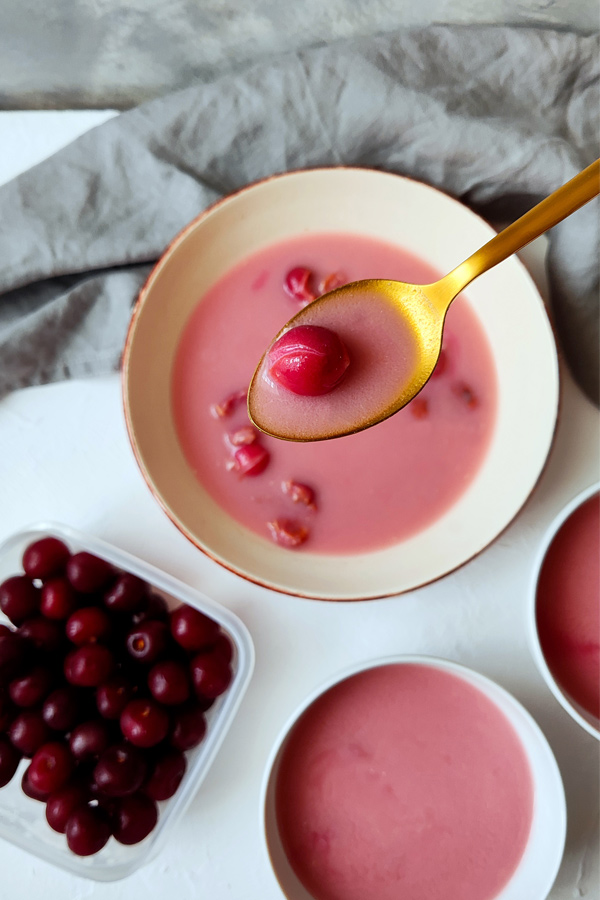
- Sour cherry soup
Lesser-Known Hungarian Soups
One lesser-known soup is Görcsleves (also called tied-noodle soup), which is mainly prepared in Eastern Hungary. It is worth tasting if you travel to that region.
In my grandmother’s old cookbook, I also found a recipe for milk soup, made from 1.5 liters of milk, 0.5 liters of water, a pinch of salt, and 50 grams of sugar. Into this, they grated a firm dough made from eggs and flour.
The Soups of Hungarian Cuisine
Hungarian soups are hearty and richly seasoned. However, in the list above you may have noticed soups that you would not immediately think of as Hungarian. The reason is that today we consume countless adopted soups as well, including various vegetable soups, cream soups, and – under the influence of German cuisine – both hot and cold fruit soups.
Classification of Soups [3]
Clear Soups
Meat Broths
Examples:
- Goose soup
- Beef broth
- Hen soup
- Pheasant soup
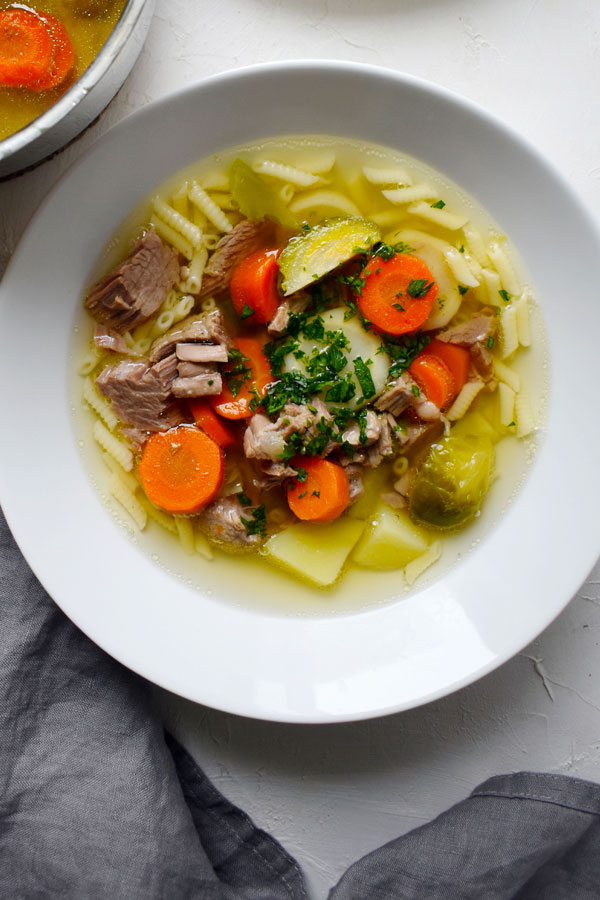
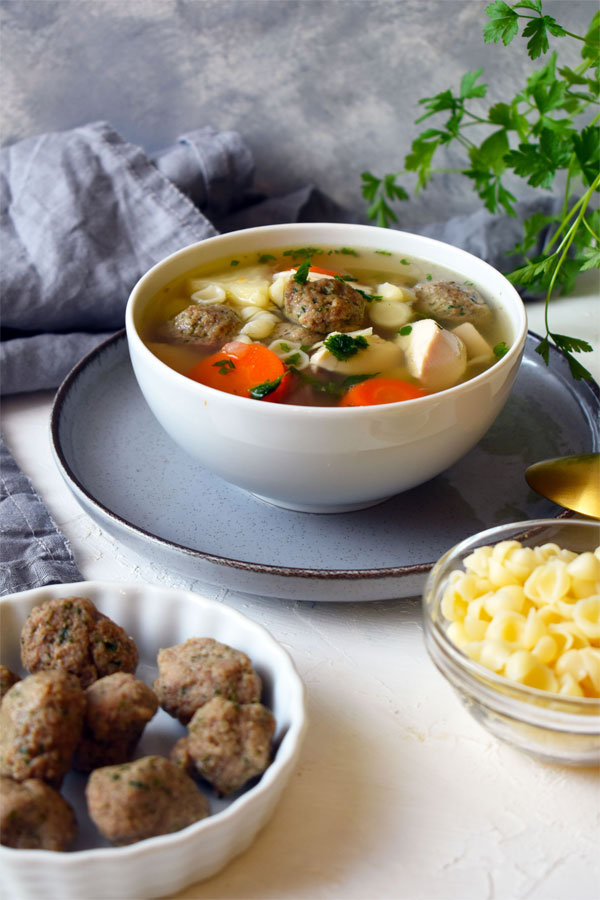
A good meat broth is made from the meat of a mature, older animal. It must be simmered for a long time (3-5 hours), allowing all the flavorful substances to cook into the soup, making it both nourishing and healthy.
Consommés
Examples:
- Pork loin bone soup
- Vegetable consommé with vegetable dumplings
- Bone broth (usually made from beef bones)
Hungarian-Style Clear Soups
Examples:
- Goulash soup
- “False” goulash soup
- Hungarian dumpling soup
- Tarhonya soup
- Lebbencs soup
- Mixed bean soup
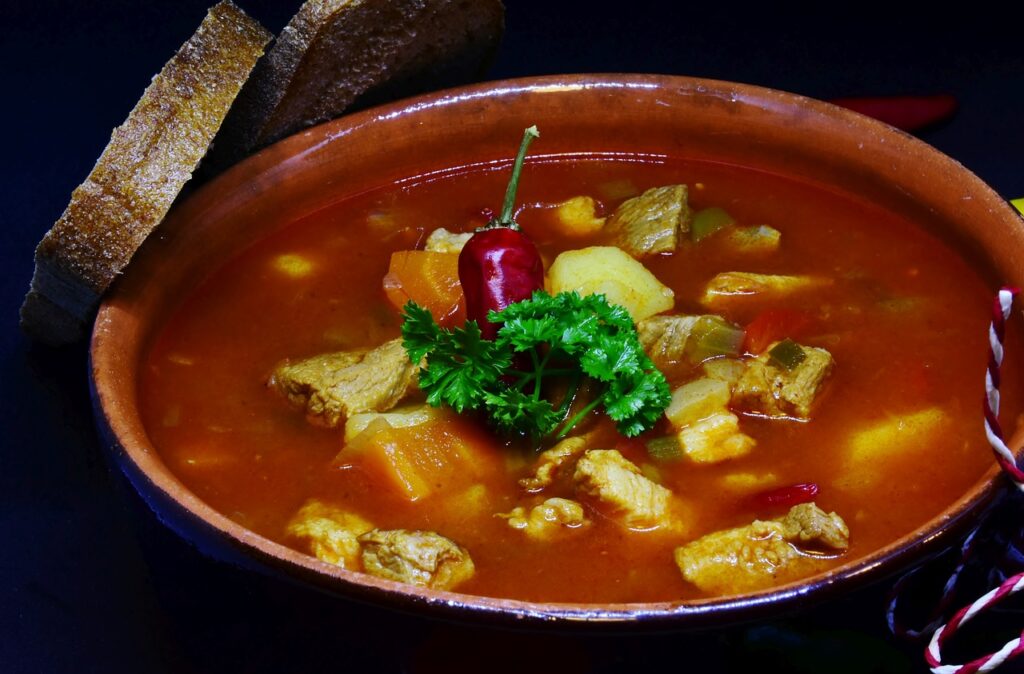
The common characteristic of Hungarian-style clear soups is that they contain no thickening. Alongside their delicious, mildly spicy flavor, their color comes from paprika, giving them a rich reddish appearance.
Complex Clear Soups
Examples:
- Újházy chicken soup (named after the actor Ede Újházy)
Other Clear Soups
Examples:
- Vegetable rice soup with drizzled egg pieces
- Fish soup
Thickened Soups
Simple Thickened Soups
Examples:
- Kohlrabi soup
- Cabbage soup
- Sour egg soup
- Celery soup
- Sour cream potato soup
- Onion soup
- Shelled bean soup
- Yellow pea soup
- Sour cream mushroom soup
- Green bean soup
- Cauliflower soup
- Vegetable soup
- Lentil soup
- Chicken ragout soup
- Creamy Zala-style chicken soup
- Sour cream bean soup
- Green pea soup
- Caraway seed soup
- Cheese soup
- Wine soup
Puréed Soups
Examples:
- Celery purée soup
- Green pea purée soup
- Spinach purée soup
- Tomato soup
- Potato purée soup
- Lentil purée soup
- Pumpkin purée soup
- Broccoli cream soup
Cream Soups
- Examples:
- Cheese cream soup
- Mushroom cream soup
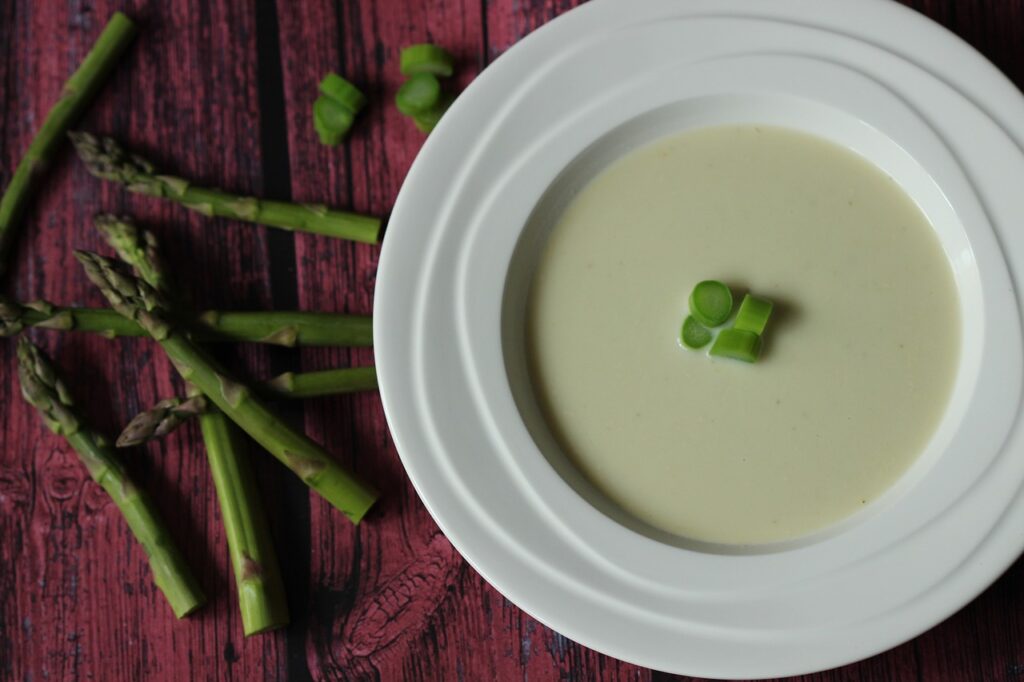
- Asparagus cream soup
- Potato cream soup
- Celery cream soup
- Corn cream soup
- Garlic cream soup
Fruit Soups
Examples:
- Cold apple soup
- Cold sour cherry soup
- Cold apricot soup from Kecskemét
- Cold raspberry cream soup
- Cold mixed fruit soup
Mucilage Soups
Examples:
- Rice mucilage soup
- Oat mucilage soup
- Pearl barley soup
These soups are made from grains such as rice, wheat, oats, pearl barley, or corn. The grains are cooked for a long time in water or bone broth until the starch content dissolves. This starch gives the soup its thick consistency. The soup is then strained and seasoned, and may be enriched with milk, cream, butter, or egg yolk.
Mucilage soups have a strong tradition in Indonesian and other Asian cuisines.
Complex Thickened Soups
Examples:
- Jókai bean soup
- French onion soup
- Frankfurter soup
- Nyírség dumpling soup
- Paloc Style Soup
Soup Garnishes and Additions
Thin Noodles (Metélt)
Used mainly in clear soups, especially meat broth and bone broth.
Snail-Shaped Pasta (Csigatészta / “Goose Neck”)
A characteristic Hungarian soup pasta, traditionally prepared for festive occasions. Mainly served in meat or bone broth.
Csipetke
Tiny pieces pinched from a firm dough made of eggs, flour, and a little salt. Most commonly added to goulash soup.
Grated Dough
Firm dough grated directly into lighter soups.
Drizzled Dough
A thin batter made from eggs, flour, and a little salt is poured through a spoon or funnel into the soup while stirring continuously.
Fried Soup Pearls
Made from drizzled dough. The batter is pushed through a coarse grater into hot oil. Mainly served with cream soups.
Butter Dumplings
One egg is mixed thoroughly with 30 g of butter, then enough water is added to create the right consistency. The dumplings are spooned or cut into the soup. Especially suitable for vegetable or mushroom soup.
Semolina Dumplings
A mixture of eggs, semolina, salt, and parsley is shaped into dumplings with a spoon and cooked in hot broth.
Liver Dumplings
You can find the recipe here: Chicken Soup with Liver Dumplings.
Potato Dumplings
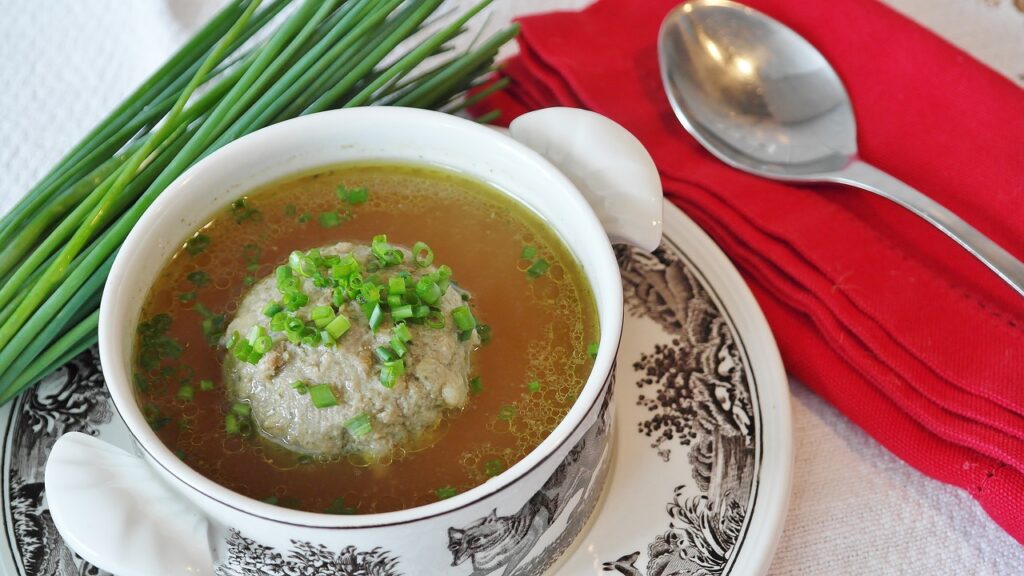
Made from cooked potatoes, flour, semolina, onion fried in fat, eggs, salt, and pepper. The mixture is kneaded into dumplings and cooked in the soup.
Bread Dumplings
Made from bread rolls, eggs, onion fried in fat, parsley, salt, pepper, breadcrumbs, and flour.
Meatballs
Made from minced meat and various spices. Many versions are known.
Pancake Strips
Traditional savory pancakes are sliced into thin strips and placed on top of the soup.
Beaten Egg Garnish
Beaten eggs are poured into hot soup in a thin stream while stirring with a carving fork, creating delicate egg ribbons.
Toasted Bread Cubes
Bread or bread rolls are cut into cubes and toasted in the oven. Mainly served with cream soups.
Tarhonya
Can be added to tomato soup, meat broth, or vegetable soup.
Matchstick Noodles
Mainly used in fisherman’s soup – essential for the Baja-style fisherman’s soup – but also suitable for meat broth.
What Should You Serve Soup In?
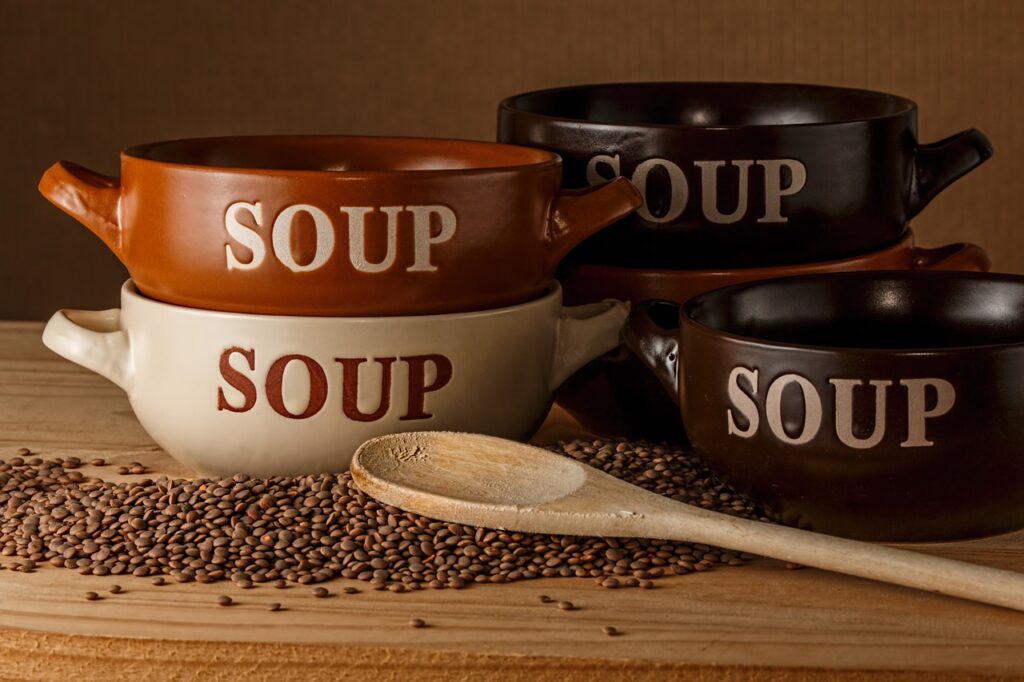
Choose a soup bowl or cup suitable for the occasion. If you really want to be professional, do as restaurants do: properly temper the serving dishes according to the soup. Use hot bowls for hot soups and chilled bowls for cold soups.
Restaurants have special equipment for heating plates, but at home you can simply place the plates in a warm oven for a few minutes before serving. (If you have just baked something, the oven probably still contains enough residual heat.) For cold bowls, simply place them in the refrigerator. This is especially practical for ice cream, but also works well for chilled fruit soups.
Soups that can be cooked in a cauldron – such as goulash soup, kettle goulash, or fisherman’s soup – can also be served in cauldron-shaped dishes, which retain heat for a very long time.
Some soups are traditionally served in a bread bowl, such as garlic cream soup or tarragon ragout soup. Soup bread bowls can sometimes be purchased at bakeries, though they are usually not displayed and must be ordered in advance.
You may also encounter soups prepared under a pastry crust. In this method, puff pastry is placed over the bowl and baked in the oven.
How Much Is One Serving of Soup?
The average serving size for soup is 250-400 ml, but more substantial soups – such as Újházy chicken soup or Jókai bean soup – are often served in 500 ml portions. Consommés, cream soups, and fruit soups are usually served in portions of no more than 200-250 ml in restaurants.
What Is the Role of Soup?
The role of soup is to stimulate the appetite, help cover the body’s fluid requirements, and provide essential mineral salts extracted from vegetables.
When Should You Eat Soup?
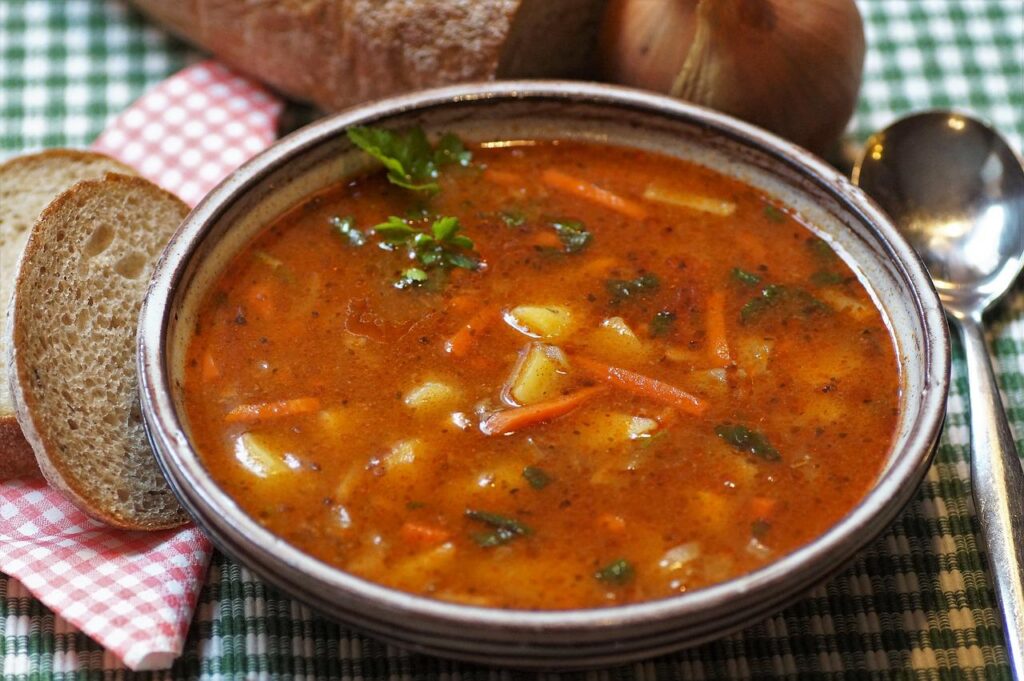
In Hungarian tradition, soup is part of the classic three-course meal and serves as the opening dish. We mainly choose soup for lunch, although lighter soups can also easily be eaten for dinner. A vegetable soup or cream soup can make an excellent dinner on its own or with a few cubes of wholegrain bread.
The tradition of Sunday meat broth remains deeply rooted in many Hungarian families and is passed down from generation to generation. However, soup is not only for weekends. There are many quick soups that can still be prepared after coming home from work in the evening – especially most vegetable soups and cream soups.
Tricks to Make Hungarian Soup Diet-Friendly
Hungarian-style soups sometimes don’t fall into the “diet” category, but with a few simple tricks you can easily change that.
Replace the fat!
Where a recipe calls for lard or cooking oil, replace it with olive oil. Don’t choose extra virgin olive oil, as that is better for salads; instead, use a type that is suitable for cooking as well. You won’t taste the olive oil in the finished dish, you will only notice that your meal feels lighter.
Traditional homemade lard gives food a very rich flavor and is even considered healthy by some studies, but it is not diet-friendly. I personally also make goulash soup with olive oil, and I actually like it better that way – even after two bowls, I don’t feel overly full or “bloated.”
Do you really need a roux?
If a dish is made with a roux, first decide whether it is truly necessary. In my experience, not every Hungarian dish actually needs it. Perhaps in the past it was mainly used to make food more filling for people doing hard physical labor.
If you still want your soup to be thick, you can simply skip the roux. And if you feel it is necessary, replace wheat flour with oat flour, and cooking oil with olive oil.
Let me show you some alternatives to traditional roux!
Diet-friendly thickening methods
Roux (rántás)
A roux consists of two ingredients: fat and flour.
For fat, only olive oil or possibly butter is suitable. Coconut oil is not appropriate, as it does not produce a good roux.
For flour, the only really suitable option is oat flour, and to some extent buckwheat flour, although its taste differs from traditional roux.
When making a roux, use equal amounts of fat and flour. For example, one tablespoon of olive oil to one tablespoon of flour.
How to make it:
Heat the olive oil or butter, then add the flour. Stir immediately and toast it briefly while stirring continuously. Then either add cold water or cream, or pour it into the boiling dish.
Important: if you are using roux, cook the soup for at least 5 minutes after adding it, otherwise the raw flour taste will remain noticeable.
Dry flour thickening (staubolás)
You can also thicken food without adding extra fat.
This method works when you are already sautéing or steaming ingredients that contain a small amount of oil or butter.
How to do it:
When the main ingredient (vegetable or meat) is almost soft, evaporate all remaining liquid. Then sprinkle flour (oat or buckwheat flour) into the remaining fat. Toast it for a few minutes while stirring, then pour in cold liquid (water, stock, milk, cream, or a mixture) and bring to a boil.
Slurry (habarás)
For a slurry, you don’t use fat at all – only dairy products (milk, sour cream, cream) and flour. Mix them until smooth with a whisk, then dilute with a small amount of hot liquid taken from the soup. After that, pour it into the dish, mix thoroughly, and bring it to a boil.
Thickening with the ingredient itself
Instead of roux or slurry, you can make your food both tastier and richer in vitamins by thickening it with its own ingredients.
For example, in a vegetable cream soup, you simply blend the cooked vegetables and return the mixture to the pot. Then bring it to a final boil with a little milk or cream.
Tafelspitz, or “plate meat”
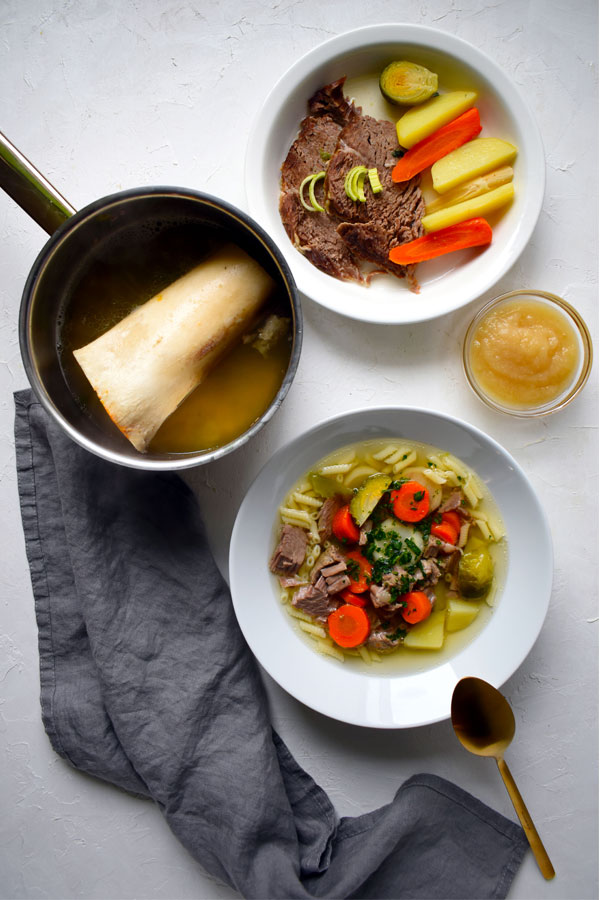
Tafelspitz is a 19th-century Austrian dish based on boiled beef, known in Hungarian as “tányérhús” (plate meat).
It is famous for its well-cooked beef and the various sauces served with it (horseradish, apple, onion, cherry), especially in the former territories of the Austro-Hungarian Monarchy.
However, good meat requires a good soup base and a lot of patience. The beef shank is cleaned and cooked slowly with bones for about 4-5 hours. (Vegetables are added toward the end.) This results in buttery-soft beef and a rich, flavorful broth.
The meat is sliced and served with the cooked vegetables and sauces. If no white flour is used in the sauces, then both the Tafelspitz and the soup consumed before it fit perfectly into a healthy diet and contain nothing that leads to weight gain.
The secret of soup
The secret of a good soup lies in balance. You need to find the right proportion of water so that your soup is neither too thick nor too thin. Practice makes perfect, which is why it is worth cooking many different kinds of soups – from simple clear soups to roux-based ones.
I personally love Hungarian soups, but I also enjoy experimenting with soups from other cuisines. I often use Italian spices freely to create exciting and healthy soups, such as one of my favorites: Italian meatball soup.
Final thoughts
In Italy, there is a saying that a good Italian housewife knows a pasta recipe for every day of the year. I believe a Hungarian version could be: a good housewife knows a soup recipe for every day of the year.
This requires loving cooking, appreciating ingredients, and experimenting a lot. You can even try cuisines from other nations. According to Hungarian folk tales, soup can even be made from stone – so use your imagination freely!
Which is your favorite soup? Write it in the comments!
Sources:
[1] Lukács–Oriskó–Sándor–Zsolnay: Food Preparation Knowledge, Fine Arts Publishing House, 2011.
[2] Ilona Horváth: Cookbook, Kossuth Publishing, 1976.
[3] Lukács–Oriskó–Sándor–Zsolnay: Food Preparation Knowledge,Fine Arts Publishing House, 2011.
Photos: pixabay.com